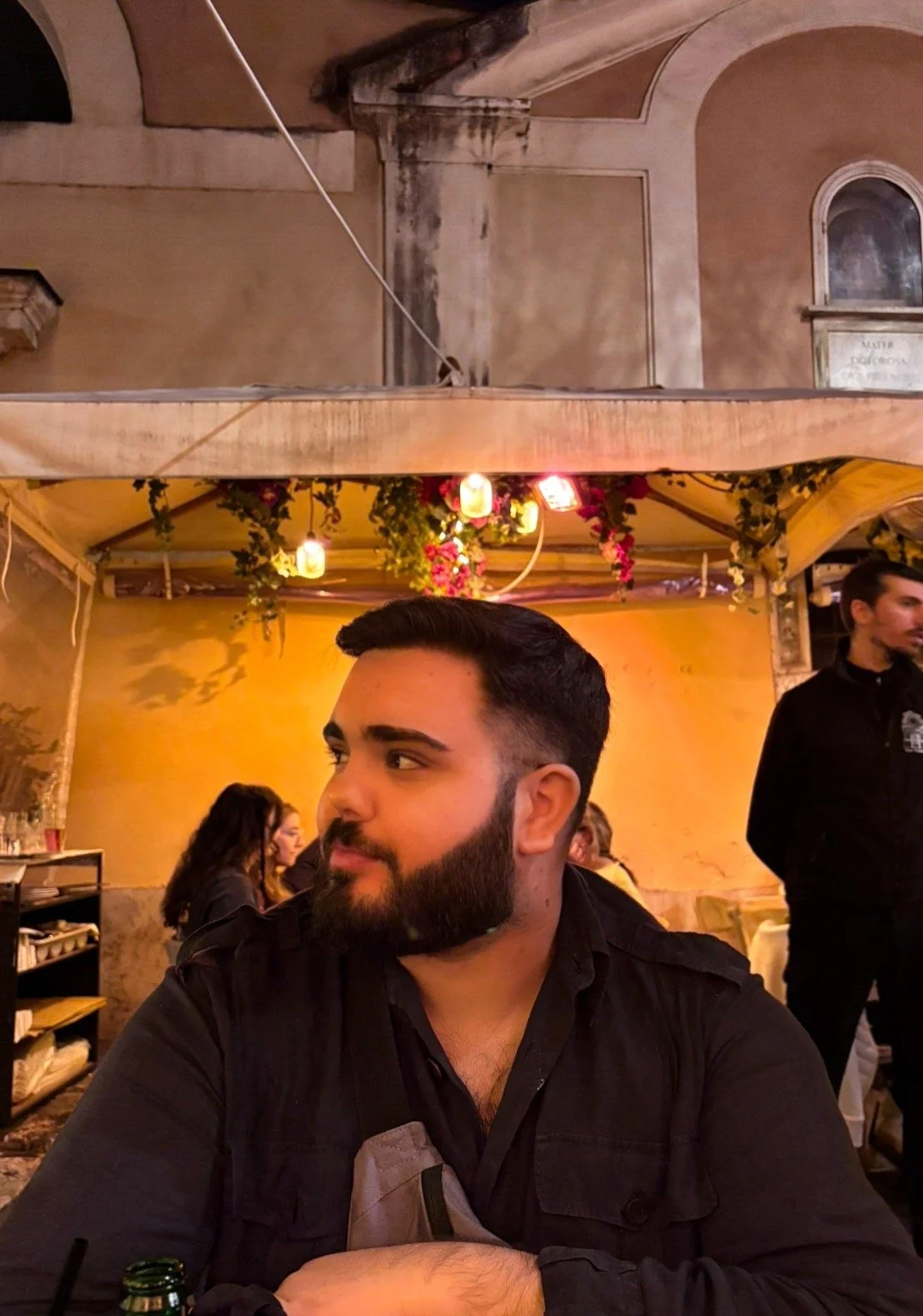
Arbër Qerka-Gashi (b. 1997, London) is a writer, curator, visual artist and community organiser of Kosovar heritage. He holds a BA in History from Goldsmiths, University of London, and an MA in Gender, Sexuality and Culture from Birkbeck, University of London.
Arbër founded the research platform and publication, Balkanism in 2020, which has become a central part of his practice producing accessible educational content, producing publications, workshops, exhibitions and educational programmes that challenge ethnonationalist ideologies in the region and amongst its diasporas. He is also the co-founder of the progressive events initiative, the Balkan London Collective.
Arbër engages with a wide range of themes through his writing, curatorial work, and artistic practice. He draws on interpersonal narratives found in archives, material culture and broader cultural and historical research, as a mechanism to provoke critical reflection on social justice, ethnonationalism, migration, displacement, diaspora and intergenerational trauma.
His curatorial practice is defined by a commitment to creating experiences that are inherently community-centred, fostering spaces for collective engagement, learning and representation. Recent projects include the exhibition Inside/Outside and All In Between (2024-25) at the Migration Museum, the Festival of Migration (2025), developed in collaboration with the Being Human Festival, Goldsmiths, University of London, and the Migration Museum; TIDES: (Intertidal) Festival of Migration (2026) at Royal Museums Greenwich; and Interweaving: Textiles Between Britain and the Balkans (2026) at the Constance Howard Gallery, Goldsmiths Textile Collection.
He welcomes collaborations with collectives, organisations, and publications that share his dedication to dismantling oppressive systems and cultivating inter-ethnic solidarity.
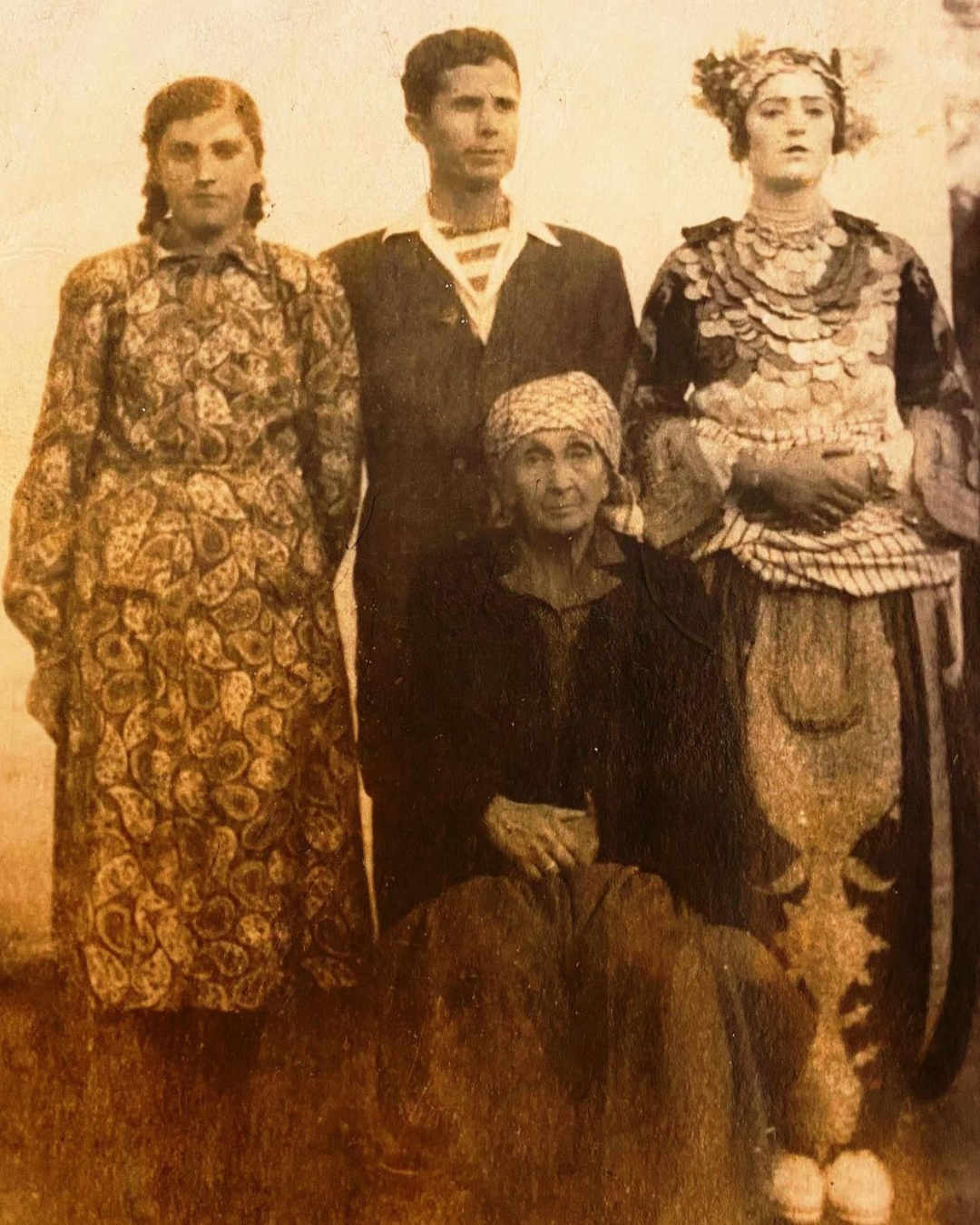
This image features Arbër’s maternal grandparents, Ibrahim & Rabije Qerka on their wedding day, Prishtina, Kosovo, 1955. It also depicts his great grandmother, Firdeze Qerka.
“I wanted my parents to be like those I saw reflected on the television, connecting us to the outside world. I was negligent as a child. But a child wants what they want, and I wanted our home to be as it “should be.” The westernised dream I felt inadequate about not having. That while our home was located in the “right” place, in the west, it abided by and carried the traumas of the Balkans at its core – engraining our “otherness”.”